September 23, 2026
European vehicles are renowned for their luxurious design, intricate engineering, responsive performance, and technological advancements. This uniqueness necessitates specialized approaches to repair and maintenance that differ significantly from those commonly used for other automobiles. Certified technicians possess the training, diagnostic knowledge, and specialized tools required to address the specific needs of these vehicles while preserving their performance and longevity. Choosing local European automotive repair can give vehicle owners access to professionals who understand the engineering principles, manufacturer specifications, and sophisticated systems found throughout European models.
1. Understanding Advanced Electronic Systems
European vehicles often incorporate advanced electronic systems that demand careful handling during diagnostics and repairs. These systems oversee everything from engine management and transmission behavior to climate controls, infotainment features, and driver assistance technologies. Technicians must understand electrical diagnostics and software programming to evaluate these interconnected components correctly. A seemingly minor electrical problem may involve several control modules, sensors, or communication networks, making systematic testing essential before repairs begin.
European manufacturers have also introduced technologies such as adaptive cruise control, electronic stability systems, parking assistance, and sophisticated monitoring features. As these technologies evolve, technicians must continually update their knowledge. A provider specializing in local European automotive repair can use appropriate diagnostic procedures to identify faults rather than relying solely on generalized troubleshooting methods. This focused approach helps technicians address underlying causes and avoid unnecessary replacement of functioning components.
2. Servicing Specialized Engine Configurations
European vehicles frequently feature specialized engine configurations engineered to balance performance, fuel efficiency, emissions control, and driving characteristics. Turbocharging, direct fuel injection, variable valve timing, and sophisticated engine-management systems are common examples. Technicians familiar with these configurations can recognize how individual components interact and determine whether a performance problem originates with the mechanical system, electronics, fuel delivery, or another supporting component.
Technical accuracy can have a significant impact on engine reliability. Incorrect parts, fluids, installation procedures, or adjustments may affect efficiency and create additional mechanical problems. Technicians providing local European automotive repair understand the importance of following specifications for torque values, replacement intervals, fluid requirements, and component installation. Careful attention to these details helps preserve the characteristics the manufacturer originally engineered into the vehicle.
3. Working Across Diverse European Makes and Models
European automobiles encompass a broad selection of manufacturers, models, powertrains, and design philosophies. Vehicles produced by Mercedes-Benz, BMW, Audi, Volkswagen, Volvo, Porsche, and other manufacturers can have substantially different service requirements. Even models produced by the same manufacturer may incorporate different electronics, engine configurations, suspension designs, and maintenance schedules depending on the model year and trim.
Hands-on experience across different vehicles gives technicians valuable familiarity with both common and model-specific concerns. Rather than assuming that the same repair technique applies universally, experienced professionals consult technical information and evaluate each vehicle individually. This adaptability becomes increasingly important as manufacturers introduce hybrids, electric vehicles, advanced transmissions, and increasingly interconnected electronic systems.
4. Maintaining Sophisticated Safety Features
Modern European vehicles frequently include sophisticated safety and driver-assistance technologies. Collision warning systems, automatic emergency braking, blind-spot monitoring, parking sensors, cameras, and lane assistance may depend on carefully positioned sensors and precise calibration. Repairs involving bumpers, suspension components, steering systems, windshields, or electronic modules can potentially affect these features.
Technicians must understand how safety systems interact before completing related repairs or adjustments. Professionals experienced in local European automotive repair can evaluate whether calibration or additional diagnostic procedures are necessary following certain services. Proper attention to these systems helps ensure that safety technologies continue operating according to their intended specifications rather than simply clearing dashboard warnings without resolving the underlying concern.
5. Meeting Specialized Training and Certification Standards
Professional training and certification help technicians build the knowledge required to service complex European automobiles. Training programs may cover engine performance, electrical systems, diagnostics, brakes, steering, suspension, transmissions, and emerging technologies. Structured education gives technicians a technical foundation while hands-on experience allows them to apply that knowledge to real-world repair situations.
Certification also demonstrates a technician's willingness to test and refine professional skills. Automotive technology changes rapidly, meaning knowledge acquired years ago may not adequately address today's vehicles. Continuing education helps technicians remain familiar with updated diagnostic platforms, service procedures, technical bulletins, and new vehicle technologies. This combination of education and practical experience is particularly important when working with premium vehicles containing highly integrated mechanical and electronic systems.
6. Following Manufacturer Specifications
Manufacturer specifications provide essential guidance for maintaining and repairing European vehicles. These instructions can identify required fluids, service intervals, component tolerances, installation sequences, programming procedures, and torque specifications. Following this information helps technicians perform work that remains consistent with the manufacturer's original engineering requirements.
Vehicle owners seeking local European automotive repair can benefit from technicians who consult current technical information rather than applying generic procedures to every vehicle. For example, using an incorrect oil specification or transmission fluid may negatively affect a sophisticated powertrain even when the product appears similar. Attention to technical documentation reduces these risks and provides a more methodical approach to servicing complicated automotive systems.
7. Using Vehicle-Specific Diagnostic Equipment
Diagnostic equipment plays a central role in modern European vehicle repair. Basic code readers may identify general trouble codes, but advanced diagnostic platforms can provide significantly more information. Depending on the vehicle, specialized equipment may access individual modules, monitor live data, perform component tests, reset adaptations, initialize replacement parts, and assist with software-related procedures.
The value of diagnostic technology depends heavily on the technician operating it. Reading a fault code is only the beginning of the diagnostic process because codes do not always identify the failed component directly. Skilled technicians interpret scan data alongside symptoms, electrical measurements, physical inspections, and manufacturer procedures. This comprehensive approach helps isolate the actual cause of a malfunction before parts are replaced.
8. Troubleshooting Complex Electrical Problems
Electrical troubleshooting has become one of the most important skills in European automotive service. Modern vehicles contain numerous modules that communicate through interconnected networks. A malfunctioning sensor, damaged wire, weak battery, poor connection, or communication failure can potentially produce symptoms in several seemingly unrelated systems.
Professionals performing local European automotive repair may use wiring diagrams, multimeters, oscilloscopes, scan equipment, and other diagnostic resources to trace these problems systematically. Instead of replacing components based solely on symptoms, technicians can test circuits and verify whether appropriate signals, voltages, and communications are present. Thorough troubleshooting can prevent unnecessary repairs while helping restore reliable operation.
9. Applying Precision Tools and Repair Procedures
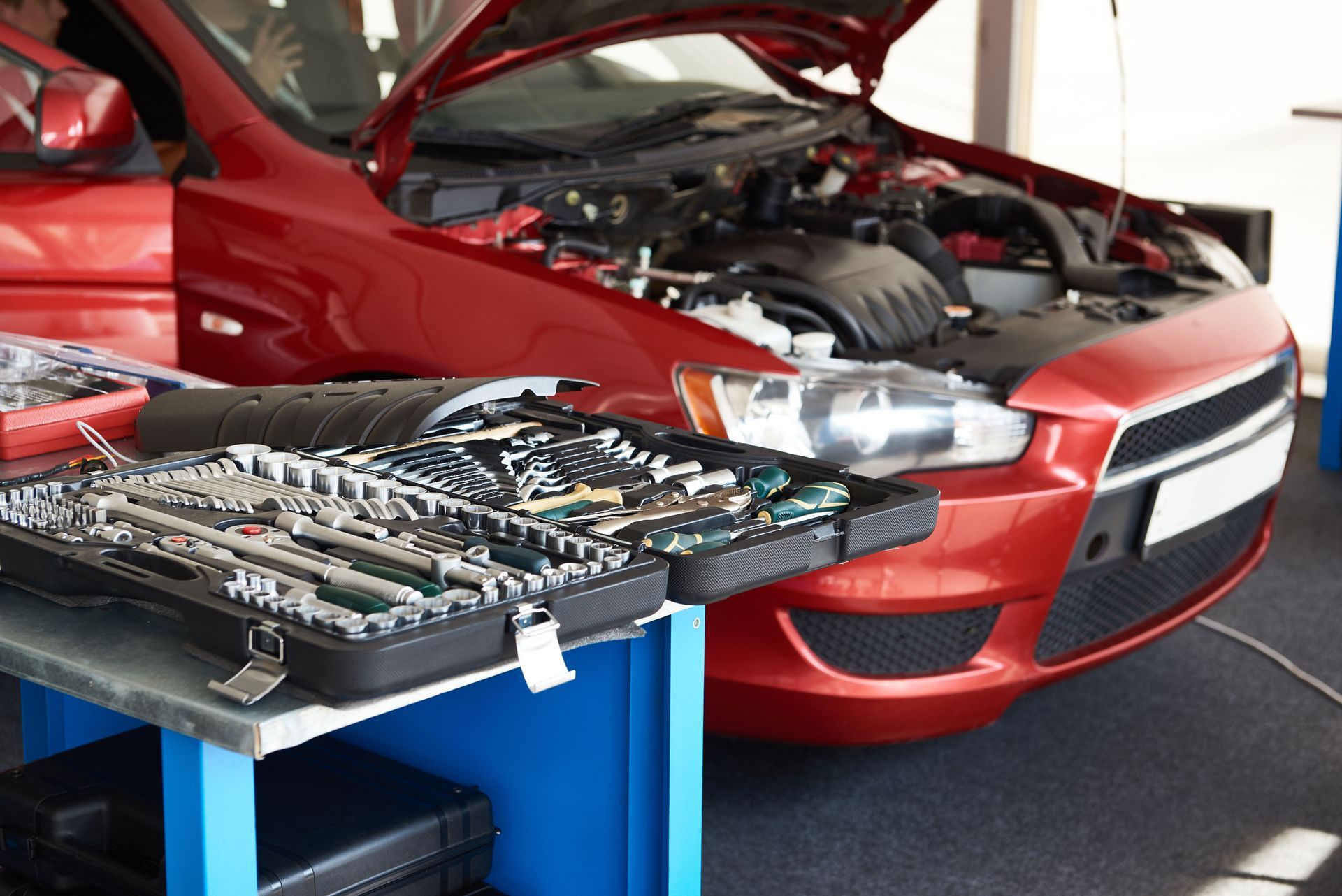
Specialized tools are frequently required to complete European vehicle repairs correctly. Certain engines, transmissions, suspension assemblies, and timing systems require manufacturer-specific fixtures or precision equipment. These tools help technicians position, measure, remove, or install components without damaging surrounding parts. Attempting the same repair without suitable equipment may increase the likelihood of installation errors or component damage.
Precision also applies to routine maintenance. Proper torque settings, fluid quantities, alignment measurements, and calibration procedures can influence vehicle performance long after a service appointment is completed. Certified technicians understand that successful automotive repair involves more than replacing a failed part. Each step must account for the broader system and how the repaired component interacts with the rest of the vehicle.
10. Adapting to Continuous Automotive Innovation
European manufacturers continue to develop hybrid powertrains, electric propulsion systems, advanced infotainment platforms, sophisticated emissions equipment, and automated driving technologies. These developments make ongoing education increasingly important. Technicians who regularly participate in training can develop the knowledge necessary to approach unfamiliar systems safely and methodically.
A qualified local European automotive repair provider must therefore combine established mechanical knowledge with an ability to adapt. Traditional skills remain essential, but technicians must also understand software, network communication, high-voltage systems, electronic diagnostics, and increasingly complex control strategies. Continuous learning allows professionals to service newer models while maintaining expertise with older European vehicles still on the road.
European automobiles combine sophisticated engineering, technology, performance, and design, making specialized knowledge an important part of responsible maintenance. Certified technicians bring together training, practical experience, appropriate diagnostic equipment, and familiarity with manufacturer procedures. From complex electrical troubleshooting to precision mechanical repairs, their expertise supports accurate service and informed maintenance decisions. By relying on local European automotive repair professionals with relevant experience and continuing education, owners can better protect the performance, safety, and longevity of their European vehicles. Contact our team at K&L European Automotive today and learn more about our automotive services.